
Handbook / Vehicle maintenance
Vehicle maintenance
Brakes, fluids, tyres and what changes when you drive
Vehicle maintenance checks8 things to know
Brakes
Test the brake pedal feel and listen for any squeaking or grinding. Check brake pads and discs for wear, and replace pads below the recommended thickness.
Handbrake
Inspect the handbrake operation and adjust if needed.
Wipers
Make sure wiper blades are in good condition and the washer fluid is topped up.
Drive belts
Inspect drive belts for wear, and replace if frayed or cracked.
Air filter
Keep the air filter clean and replace it if necessary, to maintain engine efficiency.
Lights
Check all external lights: headlights, indicators, brake lights and reverse lights.
Fluids
Check and top up engine oil, coolant, brake fluid and power steering fluid regularly. Check now and then for oil leaks under the engine and transmission.
AdBlue
Top up with AdBlue from time to time. You may get a warning light for this. The refill cap is usually next to the diesel cap, so be careful not to mix the two up.
Before you drive off6 checks
A quick check each time you leave a pitch.
Things to know when driving3 checks
Tyres and suspension5 checks
A converted camper carries more weight than an empty van, all the time. That makes correct tyre pressures and good tread matter more, especially for braking in the wet.
Tyre pressures5 steps
The right pressure depends on the wheels and tyres fitted to your van. These are the three set-ups we send out. If you are in any doubt, contact us straight away and we will check for you.
New wheels fitted? The wheel nuts and bolts must be re-torqued after 50 miles. Any local garage or tyre workshop can do this, or bring the van back to us and we will do it at no cost.
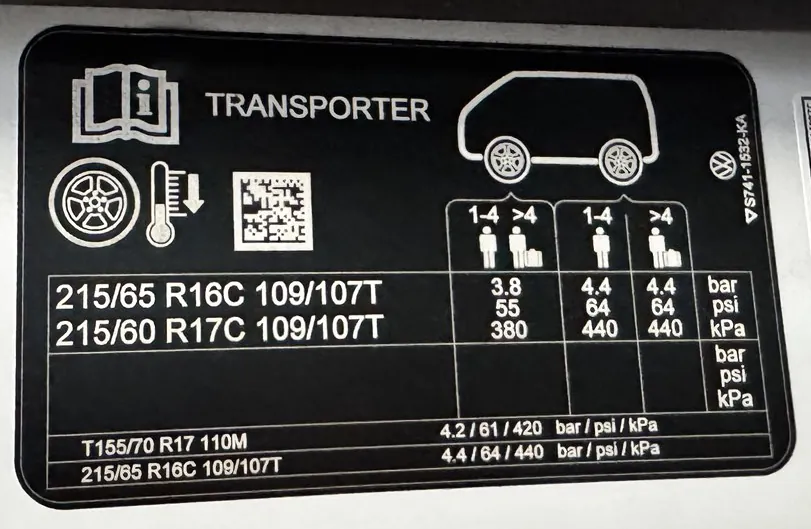
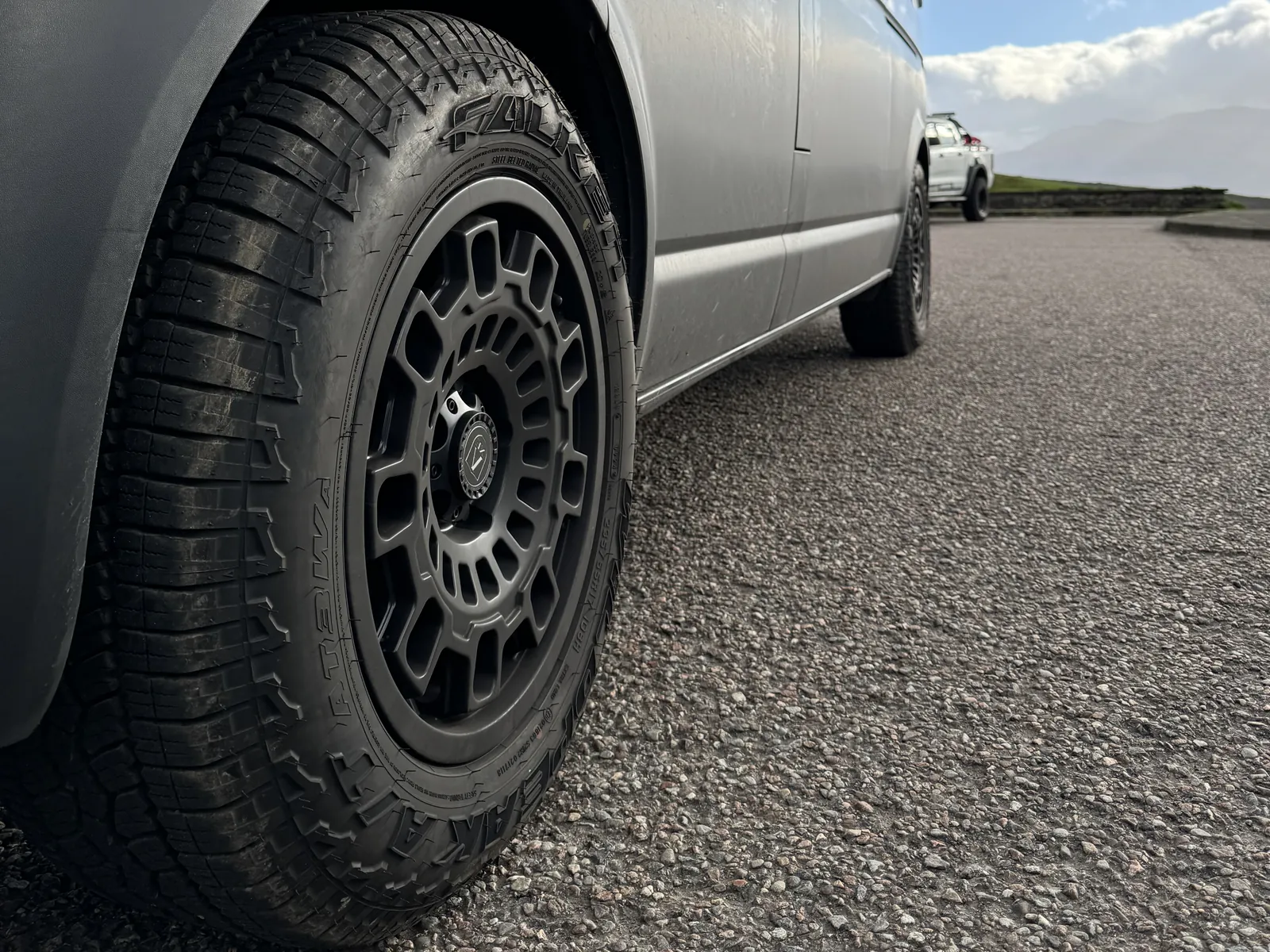
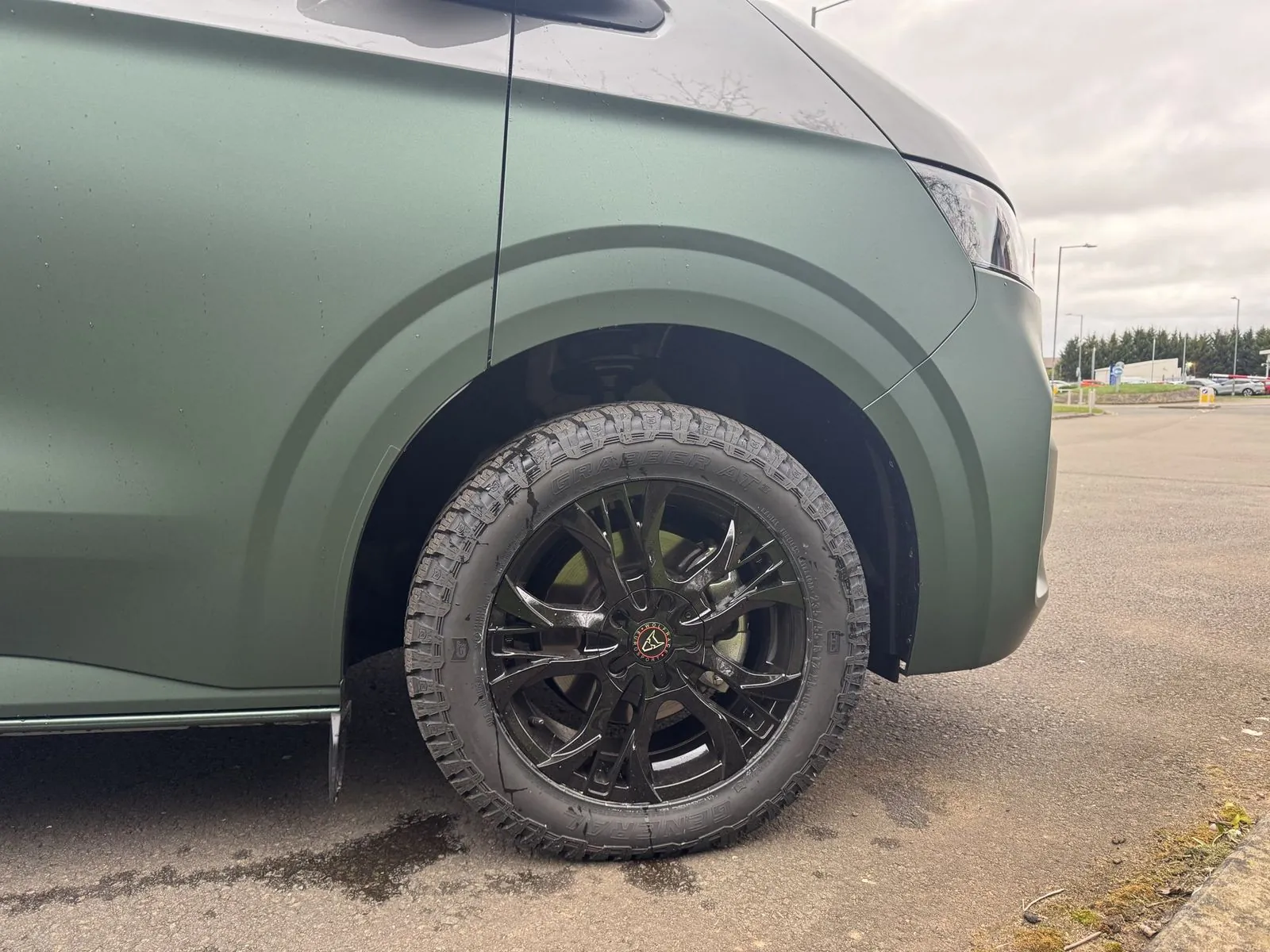
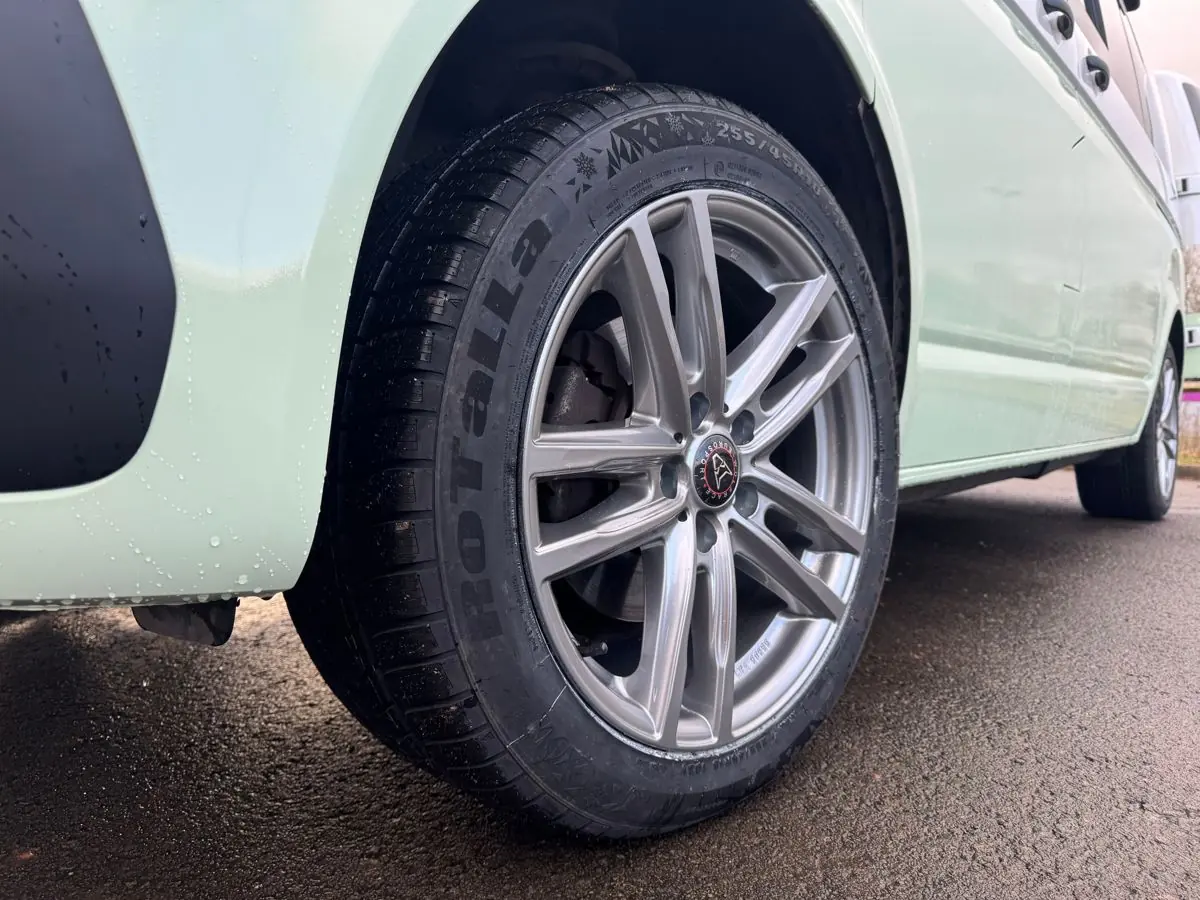
| Wheels and tyres | Pressure |
|---|---|
| Factory VW wheels and tyres | On the sticker in the driver's door opening. Typically 55 to 64 psi, depending on the van and whether it is the front or rear. |
| General Grabber all-terrain tyres | 50 psi |
| 18 inch Wolfrace wheels and tyres supplied by us | 45 psi |
- On factory wheels and tyres, find the tyre pressure sticker. It is inside the driver's door opening, on the door pillar.
- Read the tyre size printed on the sidewall of your tyre, for example 215/60 R17C, and find that row on the sticker.
- Where the sticker gives more than one load, use the fully loaded figures. With the furniture, pop-top, water and your kit on board, a camper is always close to its loaded weight.
- Check the pressures when the tyres are cold, before a journey and not straight after one. Do the spare as well, if you carry one.
- If your van has a tyre pressure warning system, reset it in the vehicle menu after changing the pressures.
The General Grabber and Wolfrace figures are confirmed with the manufacturers for the sizes we fit. Not sure which tyres you have, or fitted something different since? Get in touch and we will check for you.
Under-inflated tyres run hot, wear quickly at the edges, lengthen braking distances and use more fuel. On a vehicle that is heavy all the time, that matters more.
If you get a puncture6 things to know
A few minutes spent now finding out what your van carries will save a lot of time at the roadside.
Do you have a spare?
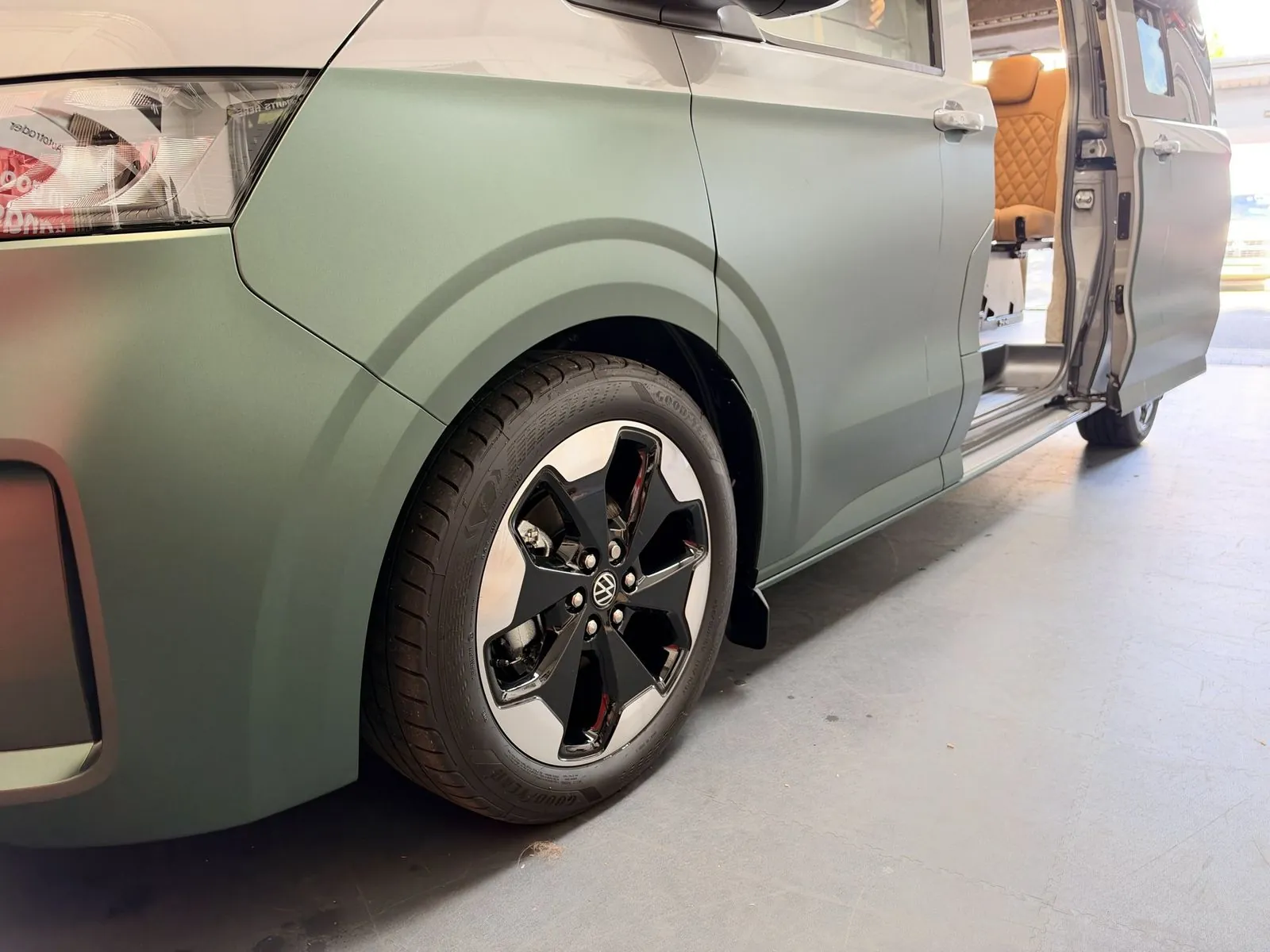
On most vans the spare wheel sits in a cradle underneath the rear. If your van is a short wheelbase or 4Motion with the underslung water tank, the tank sits where the spare would be, so there is no spare underneath.
No spare
Carry a tyre sealant and compressor kit, and make sure your breakdown cover includes campervans.
Locking wheel nuts
If your wheels have locking nuts, keep the key in the van and know where it is. Without it the wheel cannot come off.
Before jacking
Pull over somewhere safe, flat and firm. Lower the pop-top, get everyone out, apply the handbrake and leave the van in gear.
Jacking points
Use only the jacking points shown in the vehicle handbook, and tighten the wheel bolts to the figure it gives.
Afterwards
Have the wheel nuts and bolts re-torqued after 50 miles, and get the damaged tyre repaired or replaced promptly. Any garage or tyre workshop can do it, or we will do it free of charge.
Larger alloy wheels and all-terrain tyres do not always fit the standard spare wheel cradle. If we fitted upgraded wheels, ask us what spare arrangement suits your van.
Topping up AdBlue5 steps
Diesel vans use AdBlue to clean up the exhaust. The van tells you well in advance when it is getting low, with a warning and a remaining range on the dashboard.
Do not ignore the warning. If the AdBlue runs out, the engine will not restart once it has been switched off. If AdBlue ever goes in the diesel tank, or diesel in the AdBlue tank, do not start the engine. Call your breakdown service.
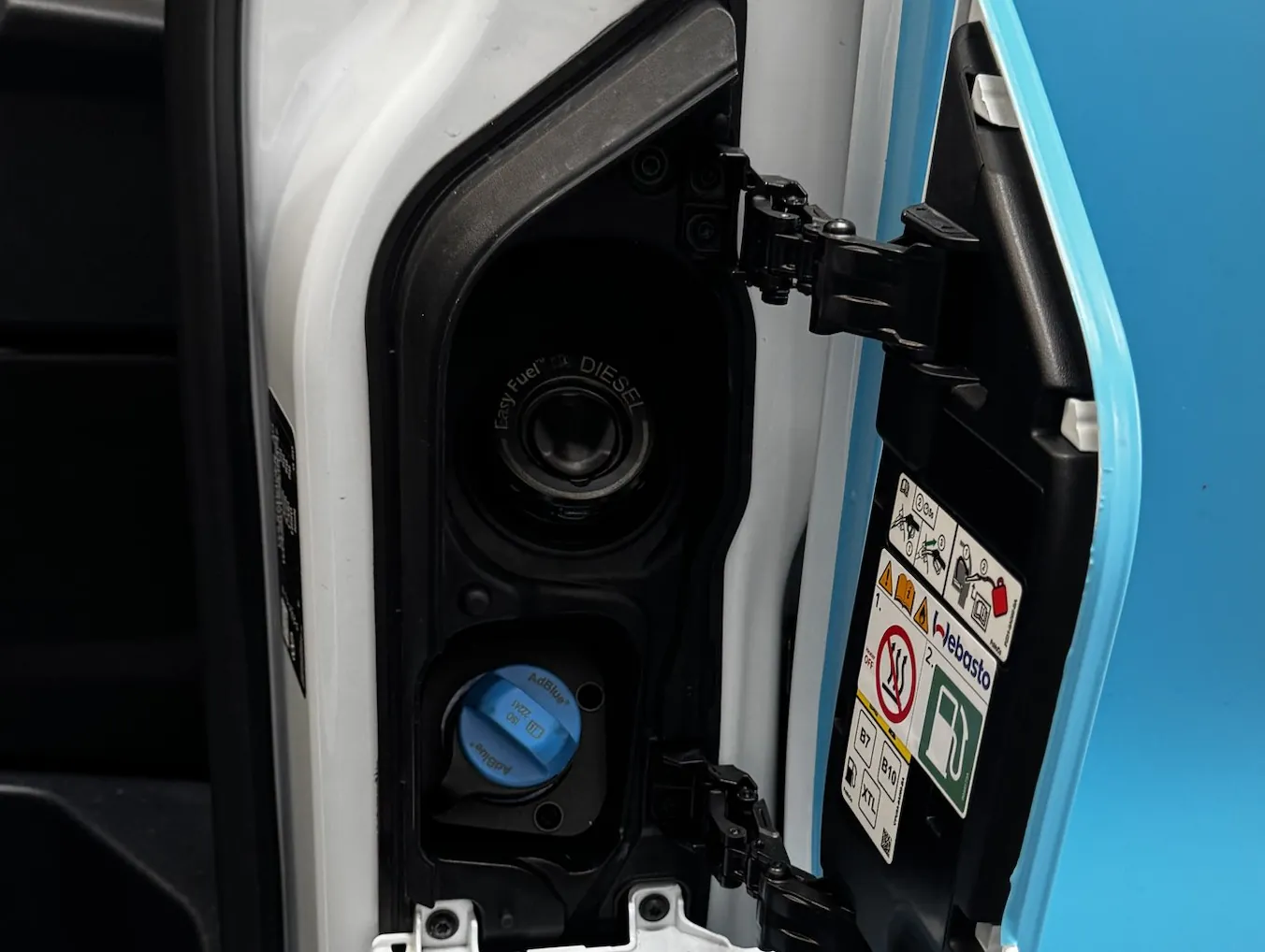
- Open the fuel flap, beside the front door. The AdBlue filler is the blue cap next to the diesel filler.
- Use AdBlue from a sealed container with a pouring spout, or the AdBlue pump for cars and vans at a filling station. Avoid the high-flow lorry pumps.
- Pour slowly and do not overfill.
- Rinse away any spills with water. AdBlue dries to white crystals and can mark paintwork.
- Refit the cap and switch the ignition on. The warning can take a short while to clear.
Getting more miles from a tank5 things to know

Tyre pressures
Soft tyres are the easiest way to waste fuel. Check them monthly and before any long trip.
Water is heavy
Water weighs a kilo a litre. Unless you need a full tank on arrival, travel with it part full and fill up when you get there.
Clear the roof
Roof bars, boxes and bikes add drag. Take off what you are not using.
Smooth and steady
Gentle acceleration and a steady motorway speed make a real difference in a tall, heavy vehicle.
Keep it serviced
Follow the van's service schedule. A clean air filter and fresh oil help the engine run efficiently.