

Off-season tips6 things to know
Shelter
If the van is unused for long periods, park it in a sheltered or covered area if possible, to reduce exposure to the elements. If that is not possible, a big cover will do.
Leisure battery
Switch off the leisure battery if the van will be stored for months without use.
Pests
Check from time to time for pests or rodents, especially in stored food or bedding areas.
Tyres
Move the van occasionally if it stays stationary, so the tyres do not develop flat spots.
Drain the water
Drain all water before the freezing months. Non-toxic antifreeze may be used, but the best guarantee is to drain the system completely.
Purge the plumbing
Open all taps and let the pump purge all the water from the plumbing, then turn the pump off. Leave a note at the fill point as a reminder: "Plumbing is disconnected".
Before freezing weather4 steps
Drain the whole water system: the fresh water tank, the grey water tank and any external hoses.
- Open all the taps and let the pump purge the water from the plumbing.
- Turn the pump off.
- Leave the taps open, so the pipes are empty and anything left has room to expand.
- Leave a note at the fill point as a reminder that the plumbing is disconnected.
Non-toxic antifreeze can be used, but draining completely is the only real guarantee.
Water expands as it freezes. Trapped in a pipe, pump or tap, it can split fittings that then leak as soon as it thaws. Leaving the taps open gives any last drops room to expand.
Camping in cold weather6 things to know
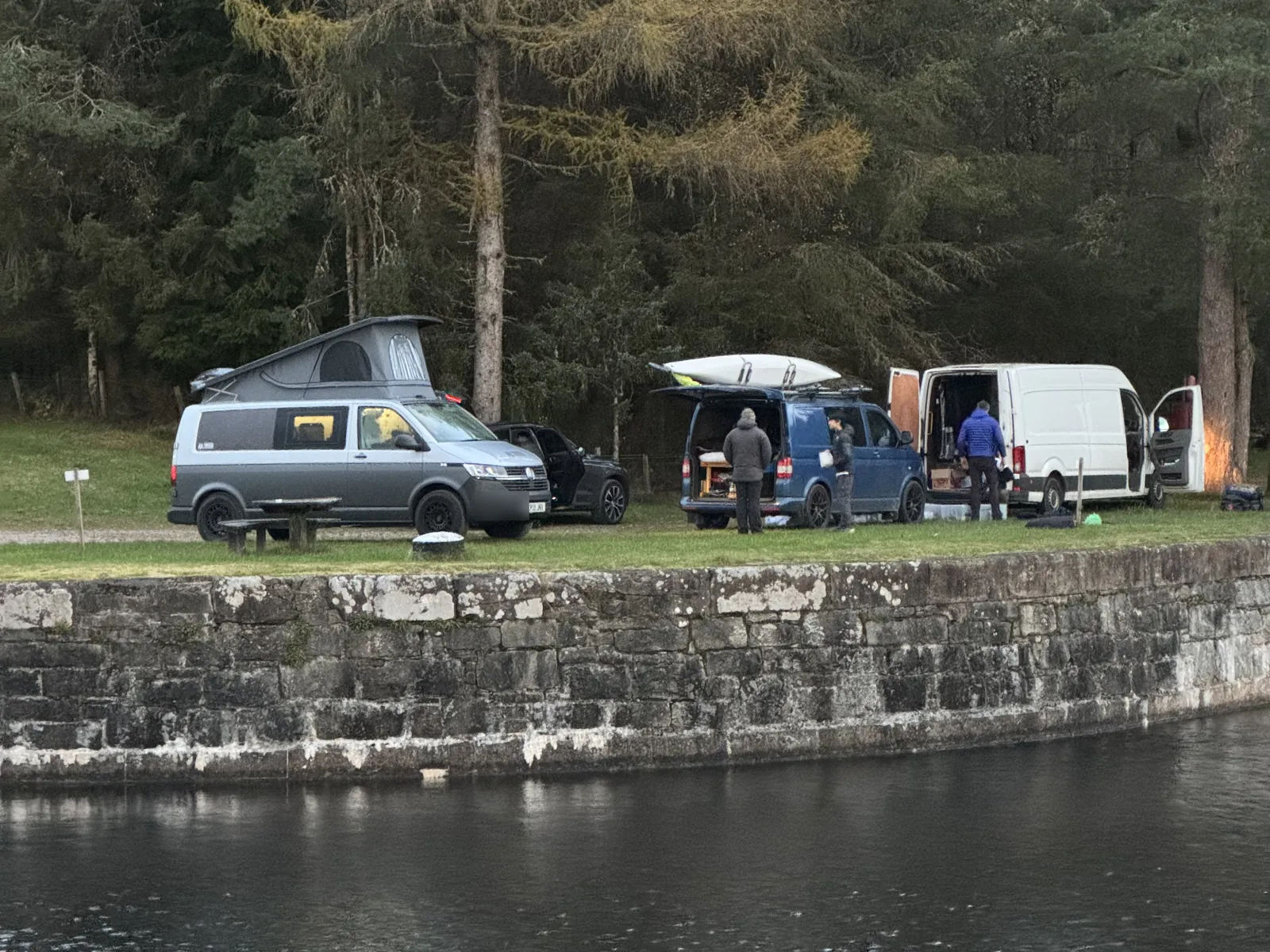
Keep the diesel topped up
The heater draws from the van's fuel tank and cannot run when the tank is below about a quarter full. Fill up before you park for the night.
Watch the battery
Short days mean less solar. Keep an eye on the Clayton level and top it up by driving or on hook-up.
Ventilate
Keep the habitation vent open. Warm, damp air from breathing and cooking has to go somewhere, or it ends up as condensation.
Pop-top
Canvas holds far less heat than the body of the van. On very cold or windy nights it is warmer to sleep downstairs with the roof closed.
Frost and water
If a hard frost is forecast, drain the water system. See before freezing weather.
Dry it out
Wipe away condensation in the morning, and air the canvas as soon as you can if you had to close the roof damp.
Keeping cool in summer6 things to know
Never leave children or pets in a closed van in warm weather, even for a few minutes.
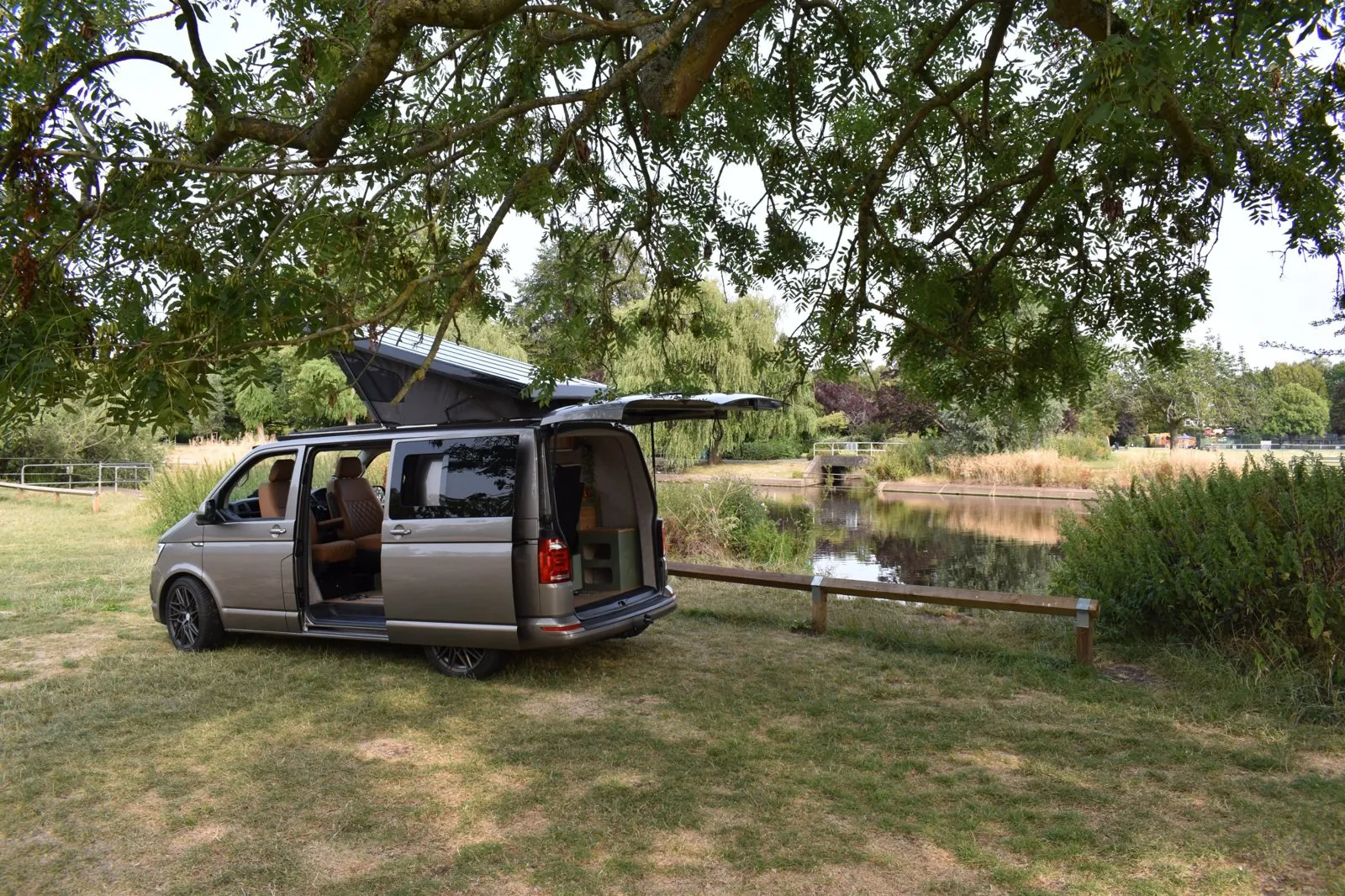
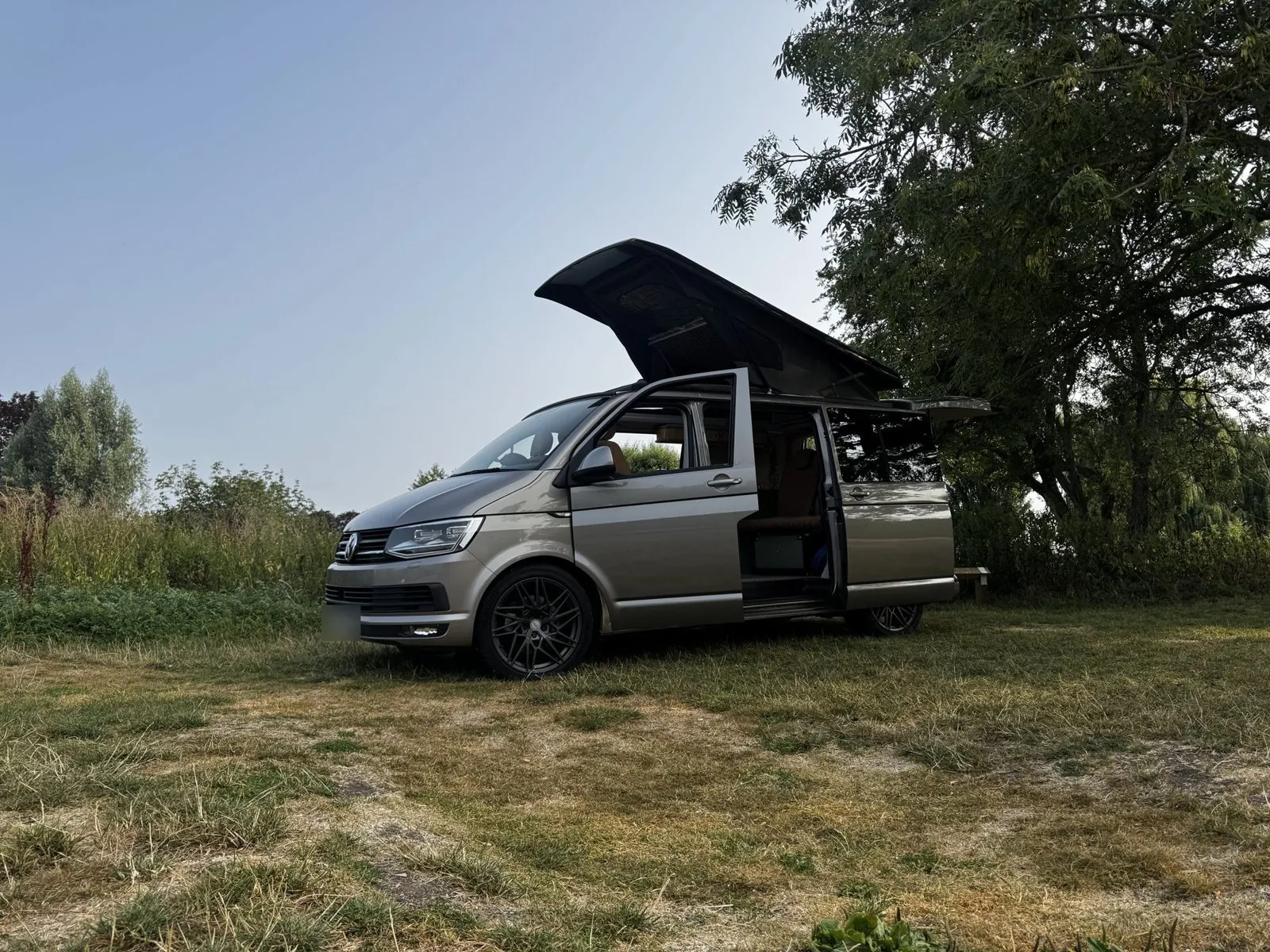
Park in the shade
Shade makes the biggest difference. The solar panel charges less out of the sun, so check the Clayton level if you are staying a few days.
Open the roof
Raise the pop-top and unzip the canvas windows, leaving the fly nets closed. Hot air rises and escapes through the top.
Fan-only mode
The heater control has a fan menu that blows air without heating, in four speeds. Useful on a still night.
Blinds
Close the blinds on the sunny side during the day to keep the heat out.
Shade outside
An awning or sun shade over the side door keeps direct sun off the opening. Cook and sit outside when you can.
Help the fridge
Load it with food and drinks that are already cold, open it as little as possible and keep its vents clear.
Getting ready for the new season9 checks

Before the first trip of the year, give yourself an hour to wake the van up.